// CASE STUDY
Google Motus
Fitness videos play at you. A coach pays attention.
THE PROBLEM
How might we design an AI fitness experience that works with the devices you already own, helps you set and track real goals, and earns enough trust to keep you coming back?
APPROACH
Embedded with the Motus team: in the daily huddles, in the engineering standups, running the research loop. I designed the camera calibration and data-collection flows, the onboarding and goal-setting, the AI coach’s screens and dynamic cueing, and the landing page users come back to. Alongside it, the competitive research and the journey map, personas, and ecosystem map that aligned the team, plus concept work for Shorts filters and connected surfaces.
The hard part
Four rounds to make setup disappear
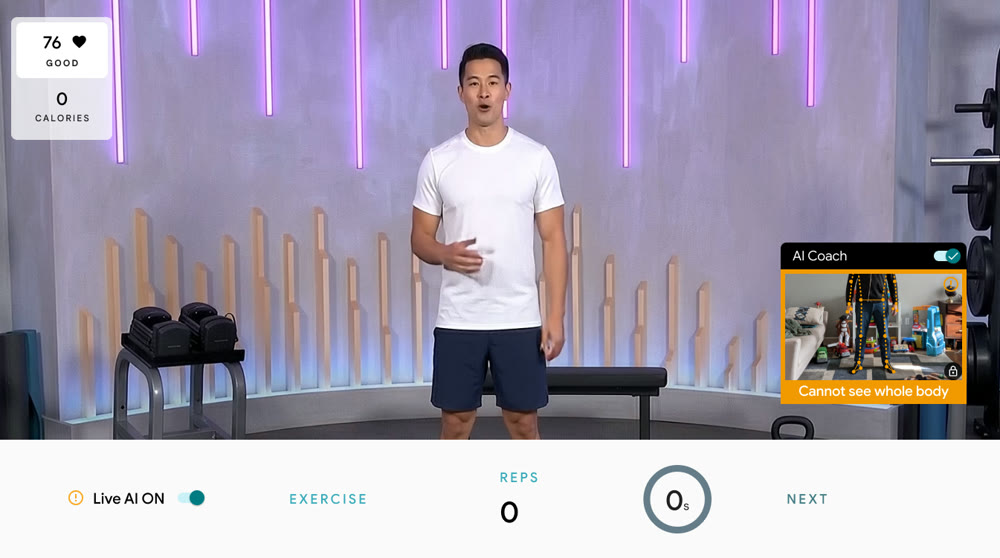
Getting a phone camera to see a whole human body is a solved engineering problem and an unsolved human one. We ran it as four rounds: sketch the ideal, build the alternatives, put them in front of users, then ship what survived.
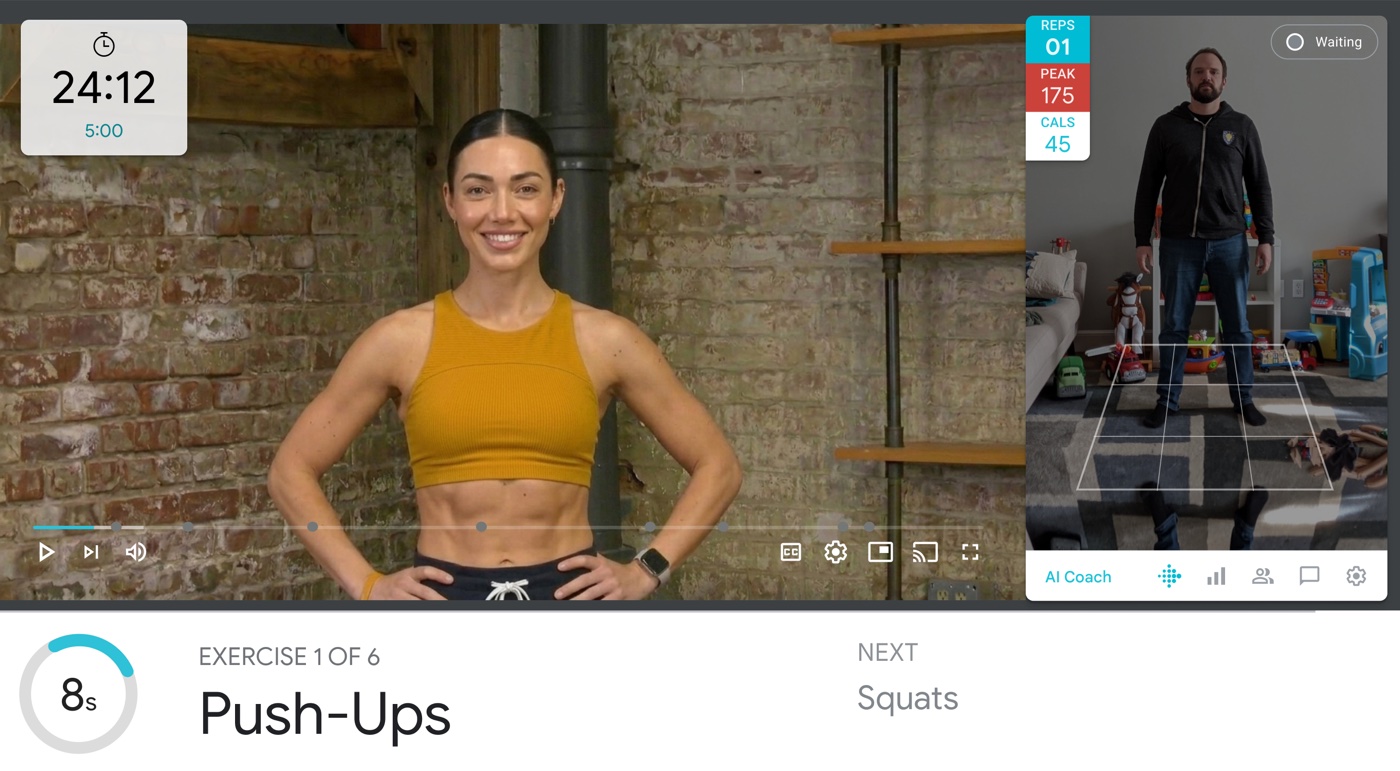
Conceptual design
What good would look like with no constraints.
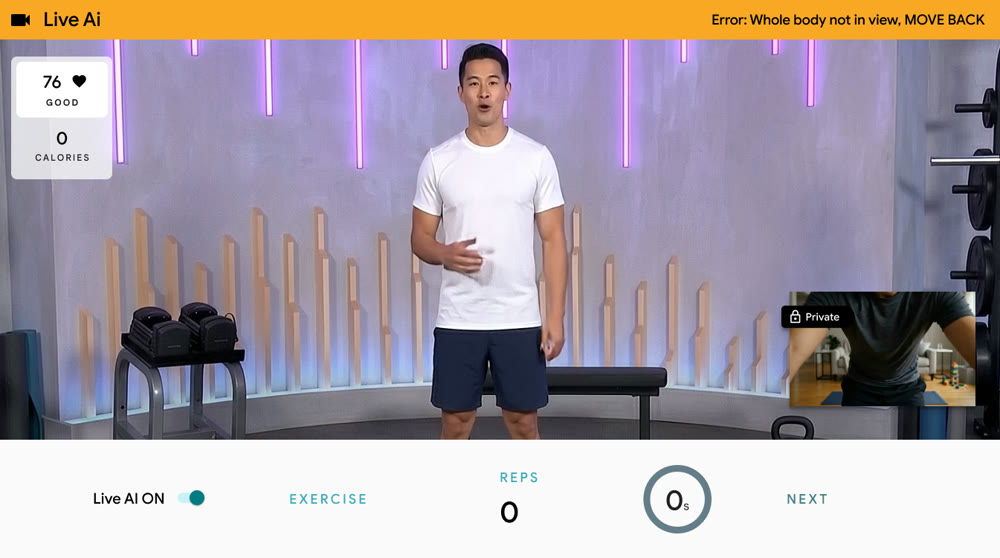
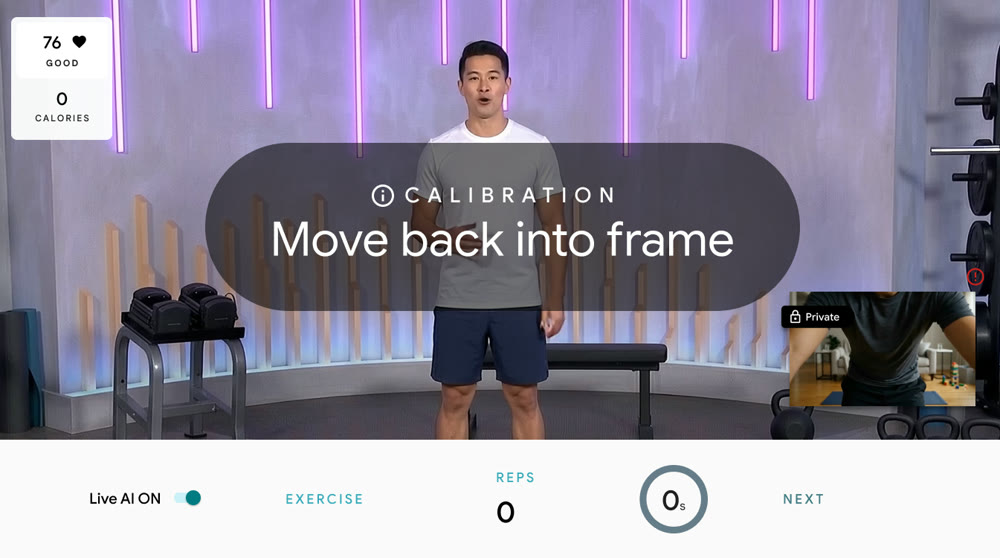
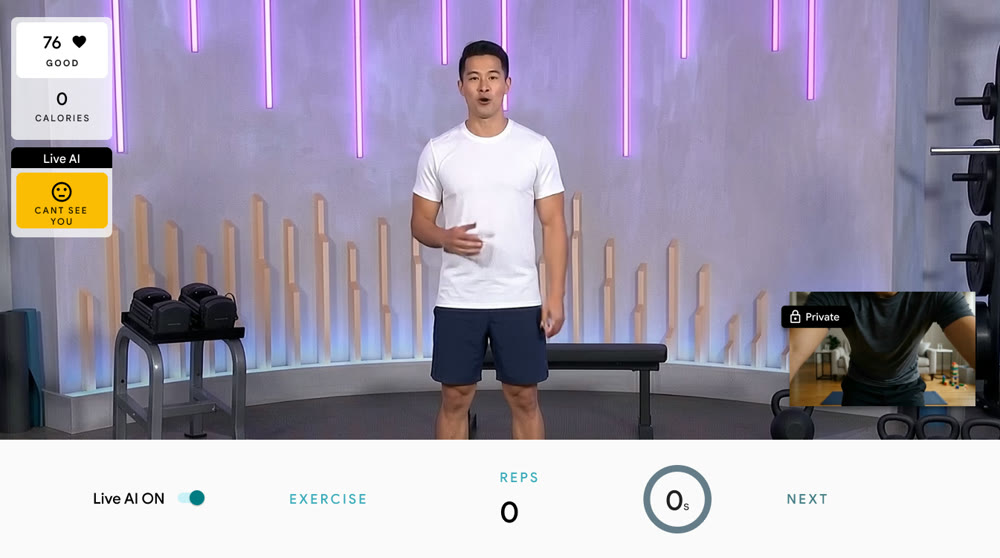
Initial explorations
Three near-term directions, built to be compared rather than admired.
Testing experience
Run through the UXR loop: designs built for testing, hypotheses and parameters set up front, then tuned against what came back.
Launched experience
The shipped bottom-bar experience.
Before
a full-screen gate: nothing else is reachable
After
setup rides in a bottom bar: the coach stays on screen, guidance is spoken as well as shown
Decisions
Teach setup inside the moment, not before it
The version that won didn't treat calibration as a gate. It gave the coach its own space and taught setup in the moment it mattered. Setup became part of the product, not a hurdle in front of it. The second call was quieter and mattered as much. You're eight feet from your phone, getting into frame. You can't read the screen from there. So every cue is spoken as well as shown: Move back, in plain language.
Onboarding
A conversation, not a settings screen
Before Motus can suggest anything, it has to know what you're training for, how often you can realistically show up, and what you actually enjoy doing. I designed the first run as a conversation rather than a preferences form: short, friendly questions, one at a time, that build a picture of the person.
The coach
Cueing that arrives in time to matter
An AI coach's real design problem isn't the model. It's making probabilistic guidance legible and worth trusting. I designed the coach's screens, its real-time feedback, and the goals and dynamic cueing behind it: corrections that arrive while the rep is happening, in words you can act on mid-movement.
The platform
A landing page that helps users get going
I redesigned the Motus landing page around three questions: what should I do today, how am I tracking, and what's coming up. The answers became smart content suggestions, goal tracking, and a weekly planner.
Research
100+ platforms, one clear read on the market
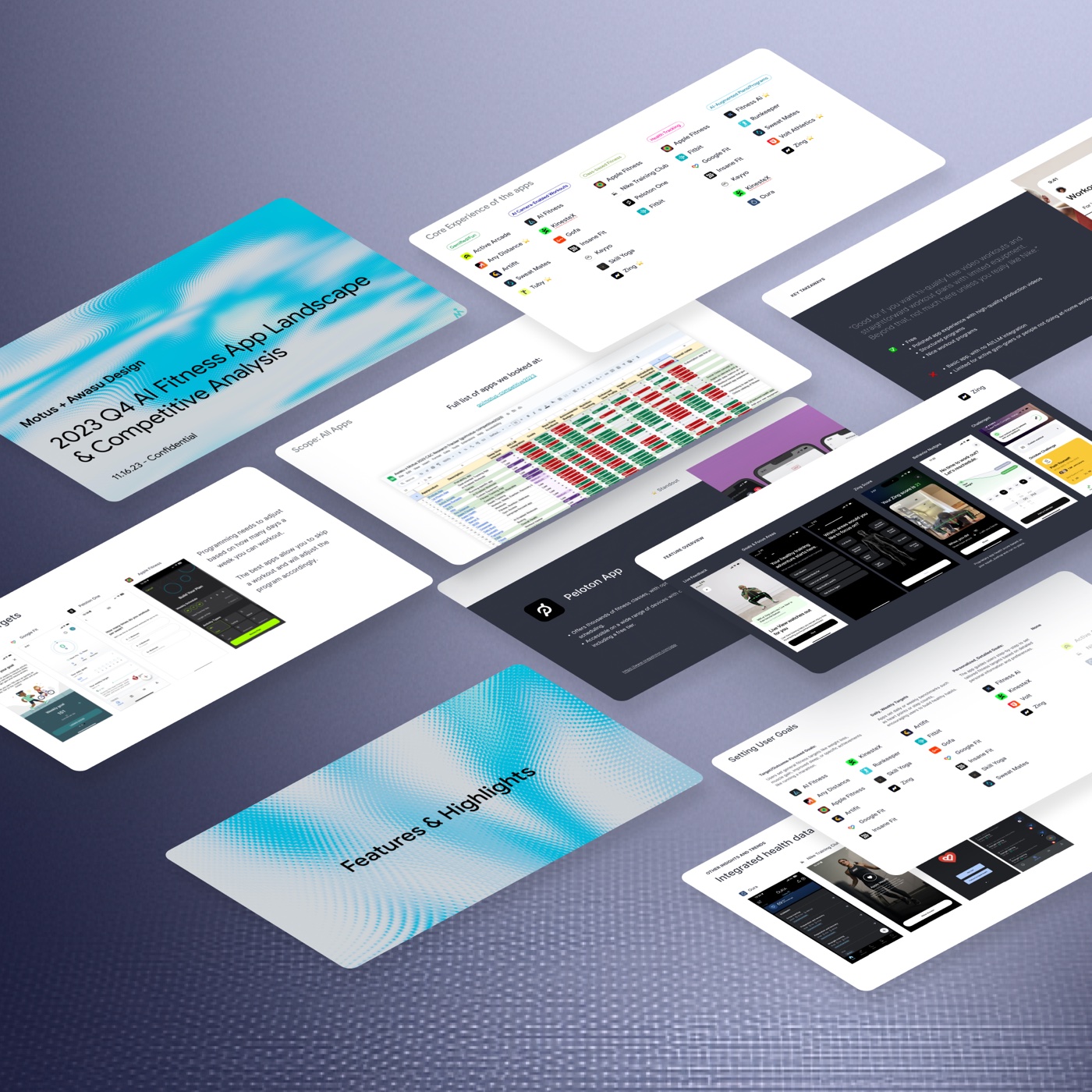
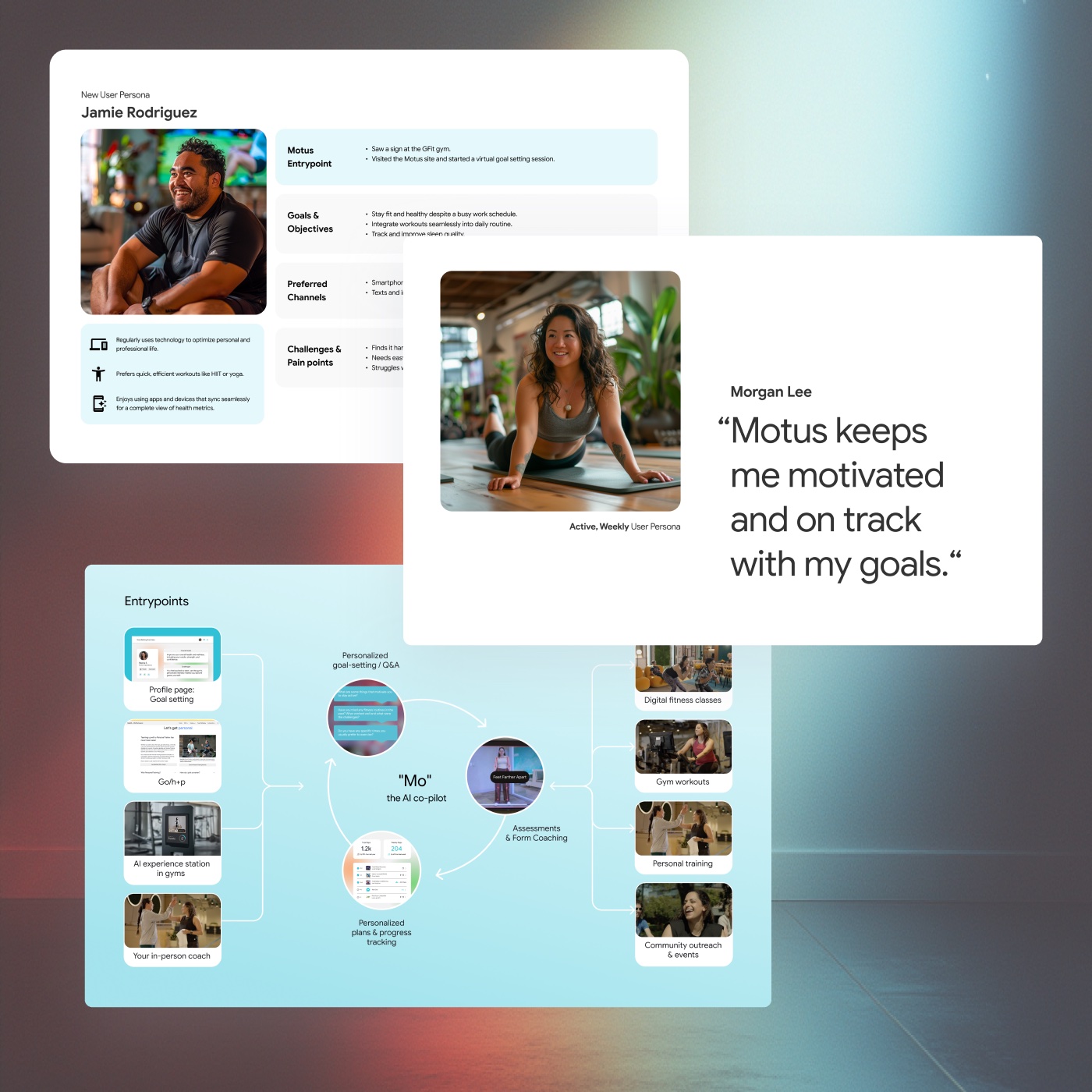
I directed ongoing competitive research across the fitness app market, testing 100+ platforms, hundreds of flows, and thousands of screens to produce annual insight reports that shaped product, design, and engineering decisions. In 2024 I turned the same lens inward: a two-week sprint producing the user journey map, personas, and ecosystem map the team adopted as its shared reference.
Experiments
A camera that reads bodies belongs in more than a workout
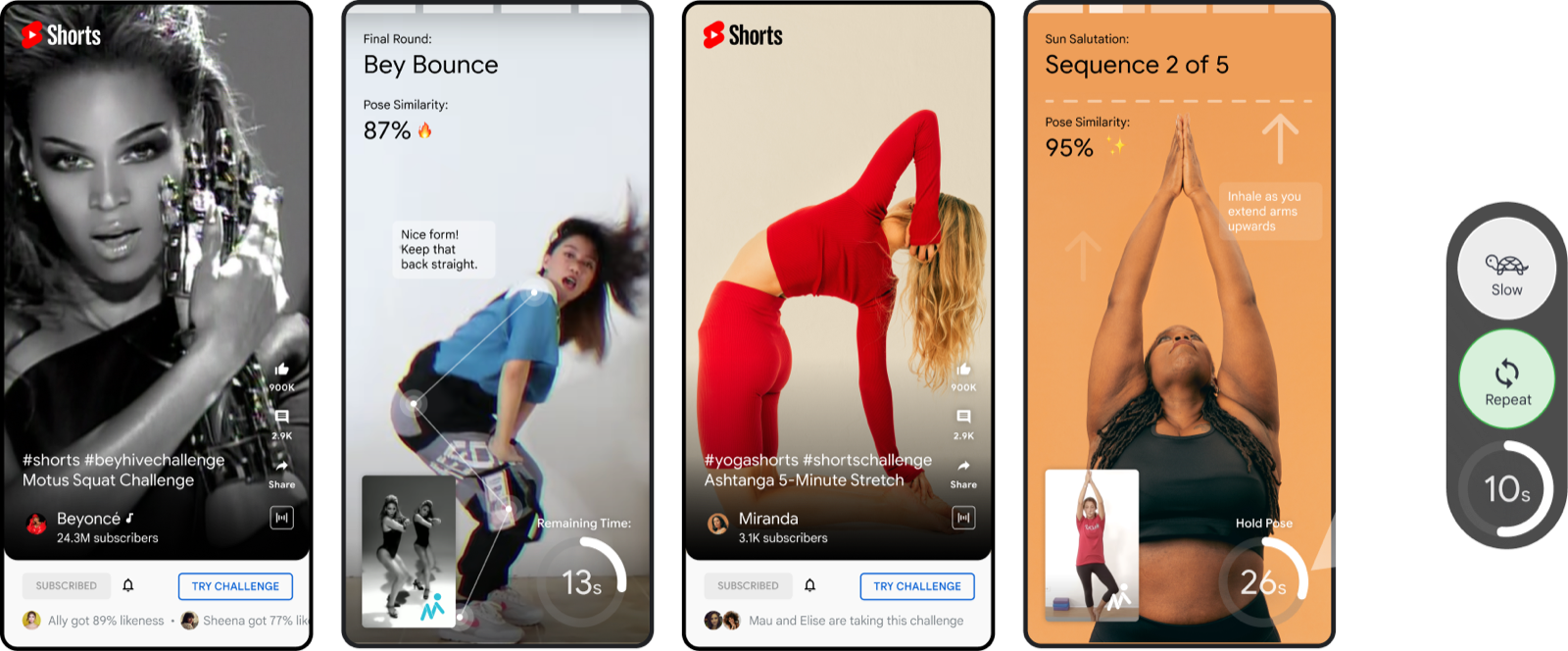
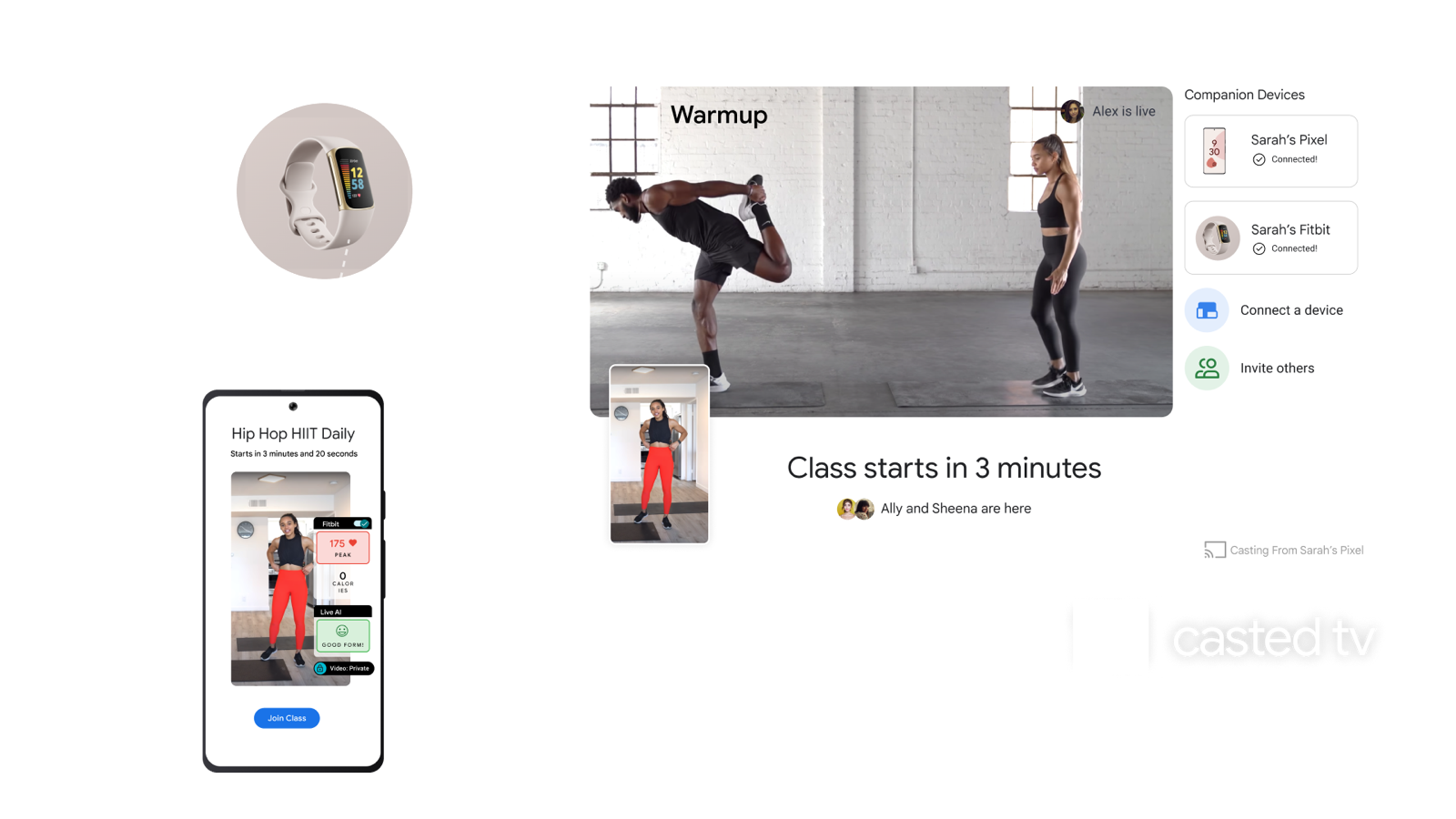
Once the model could track a body reliably, the question changed. I explored where else it could go: YouTube Shorts filters that turn rep-counting into something you play with rather than train with, and a connected-surface concept where a watch, a phone, and a TV run a single class between them.
Result
What shipped, and what stayed
Helped launch the AI coach. Shipped a steady run of platform work into the live app across releases. The research artifacts became the team's shared reference year after year. And the mission statement is still there.